
Choose an Ausify November prompt, prepare a song recommendation kit and help fans share Australian music in their own words, with a simple review plan.

Australian artists can use Ausify 2026 by choosing one November prompt, giving listeners an easy way to find the music, and leaving the recommendation in the fan’s own words. Start with a song that is already available and a prompt that honestly fits. You do not need a new release or a daily posting marathon to try the plan below.
Ausify’s official November campaign invites people to share their enthusiasm for Australian music through a different conversation starter each day. Its participation guide offers prompts and shareable materials. This article’s recommendation kit and review sheet are Playloudr’s suggested experiment, not an official Ausify requirement or a promise of extra reach.
Pick a prompt that fits a real recommendation
The 2026 calendar runs through November. For example, the 5 November prompt asks listeners to name an Australian artist they have recently followed on social media.
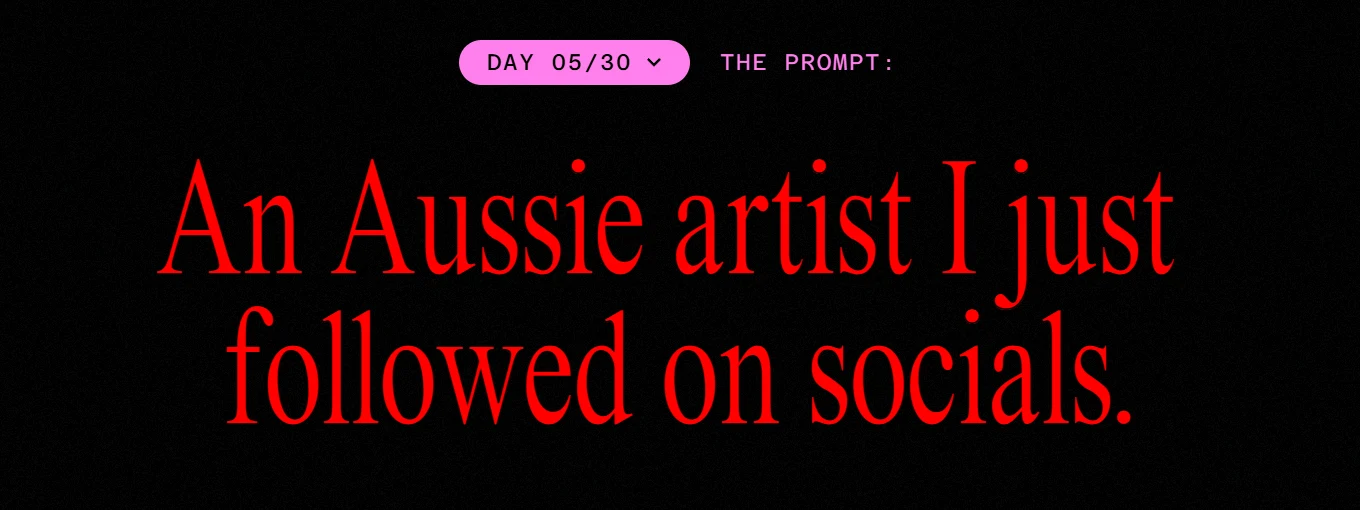
That is a useful invitation for someone who has recently discovered your work. An existing fan should not pretend to be a new follower. Let them choose another suitable prompt, recommend another artist, or simply pass.
The campaign is about Australian music. Listeners elsewhere can support Australian artists; musicians outside that focus can borrow the recommendation-kit idea for their own work without presenting it as an Ausify activity.
Choose one prompt because it matches a real story: a recent discovery, a live experience or a song someone already cares about. Do not start by deciding to fill every calendar square.
Prepare a five-part recommendation kit
Make it easy for a willing listener to identify the right recording and explain why it matters. Put these five items in a short note you can refer to while preparing your own post:
- The exact recording. Artist name, song title and version. If there are live and studio recordings, identify the one you mean.
- A working listening destination. Use the direct song link or a listening page with the correct service destinations. Test it on a phone.
- Your current profile handle. Check spelling and that it opens the intended artist account.
- One true detail about the music. For example, the unusual instrument in the chorus or where the live version was recorded. Give a fan something specific to explore, not praise to repeat.
- An image you can share. Use artwork or a photograph you have permission to use, with any required credit. Link people to Ausify’s own materials if they want the campaign’s templates.
A Playloudr Smart Link can keep a released song’s listening destinations together. It is optional: a clear, tested direct link is better than delaying a useful recommendation while you build a larger page. Keep the destination about the recording mentioned in the post.
A worked example: one existing song, one honest invitation
Imagine Mara Vale, a fictional Australian independent artist, released a single in September. A few people have recently asked about its chorus after a small show. There are no campaign results behind this example.
Mara chooses the 5 November discovery prompt. She checks the studio recording’s listening link, prepares a permitted artwork image, and writes one factual note explaining the chorus arrangement.
Her invitation could be:
“If you only found my music recently, Ausify’s next prompt might fit. If you choose to share a song, say what caught your ear in your own words. Here’s the recording so you can find the right version.”
She does not supply a glowing testimonial for fans to copy. She also joins the wider conversation by recommending an Australian artist she actually enjoys, without asking for a reciprocal post. Fans remain free to talk about someone else.
The useful preparation is the accurate song information and working destination. The recommendation belongs to the listener.
Put three tasks on a small plan
Use this copyable planning card. Keep the recording and destination unchanged; the change you are trying is one prompt-based invitation. If you have a comparable recent post, note its seven-day response first. Otherwise this attempt establishes a first baseline. The timing is an editorial convention, not a campaign rule.
- Before the chosen day: write the prompt date, intended recording, listening URL and owner’s name in one place. Test the link and confirm image permission.
- On the day: share one relevant invitation through a channel you already use. Respond to the music conversation where appropriate; do not turn it into repeated requests for tags.
- Seven days later: record what you could actually observe, note any confusion, and decide whether a similar invitation is worth repeating.
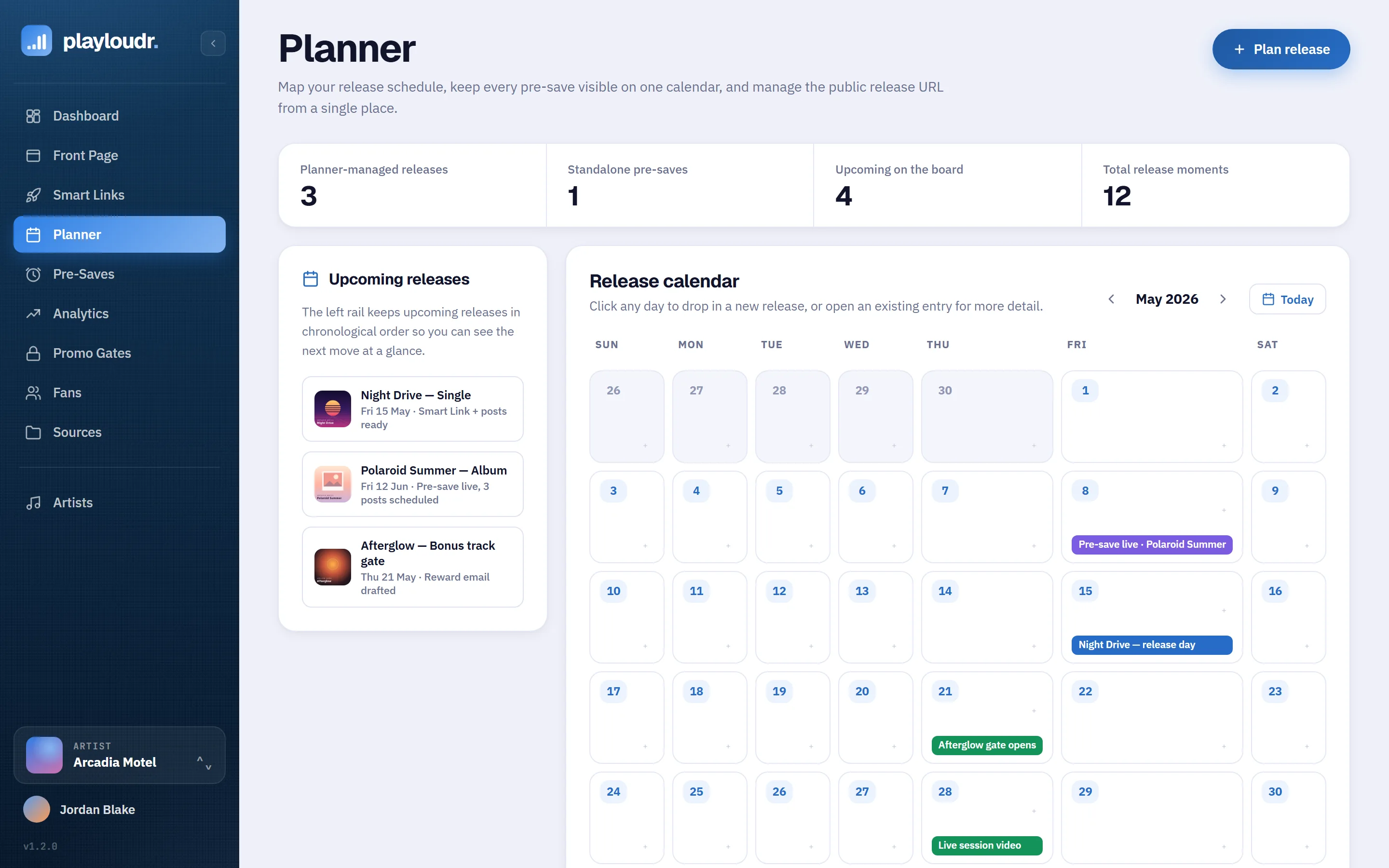
If you already use Playloudr, keep the song’s release and listening pages together in the music release planner, and put the preparation and review dates in your own calendar. One useful invitation is enough for this experiment.
Review recommendations, questions and the listening route
Keep the readout short enough to use:
- Visible recommendations: count distinct people whose relevant public posts you actually saw. Several posts by one person count as one recommender here. Private shares and untagged posts may be missing; an observed count is not the total.
- Link activity: record the chosen date window and the visit or service-choice metric your link tool reports. Exclude identifiable test activity. A service selection is not a confirmed stream or a new fan.
- Useful questions: note whether anyone struggled to find the version, asked about a musical detail or wanted to know where to hear more.
- Time spent: record preparation and reply time so you can judge whether the work was sustainable.
If people could not find the song, fix the destination before another invitation. If the same genuine question comes up, make a useful answer or short performance explanation. If there is little visible response, record the limit of what you can see rather than declaring the song or campaign a failure.
Compare counts per invitation rather than inventing a response rate without a known audience denominator. Different posting times, audiences and other promotion can affect the result. Repeat only if the invitation made the song easier to discover or produced useful conversation at a manageable time cost; otherwise change it or stop.
A small observation window cannot establish that Ausify caused a listening increase or that an algorithm rewarded your post. Use it to improve the next clear invitation. For an ongoing routine after November, follow the Academy’s weekly fanbase plan.
Sources and further reading
- Ausify 2026: participation guide · checked 4 November 2026
- Ausify: November 2026 prompt calendar · checked 4 November 2026
- Ausify: the day-five artist-discovery prompt · checked 4 November 2026
- Playloudr Smart Links · checked 4 November 2026
- Playloudr music release planner · checked 4 November 2026
- Academy: a weekly fanbase plan · checked 4 November 2026