
Prepare November merch orders with a carrier quote, product-data check and clear shipping promise after Bandcamp’s EU customs update.
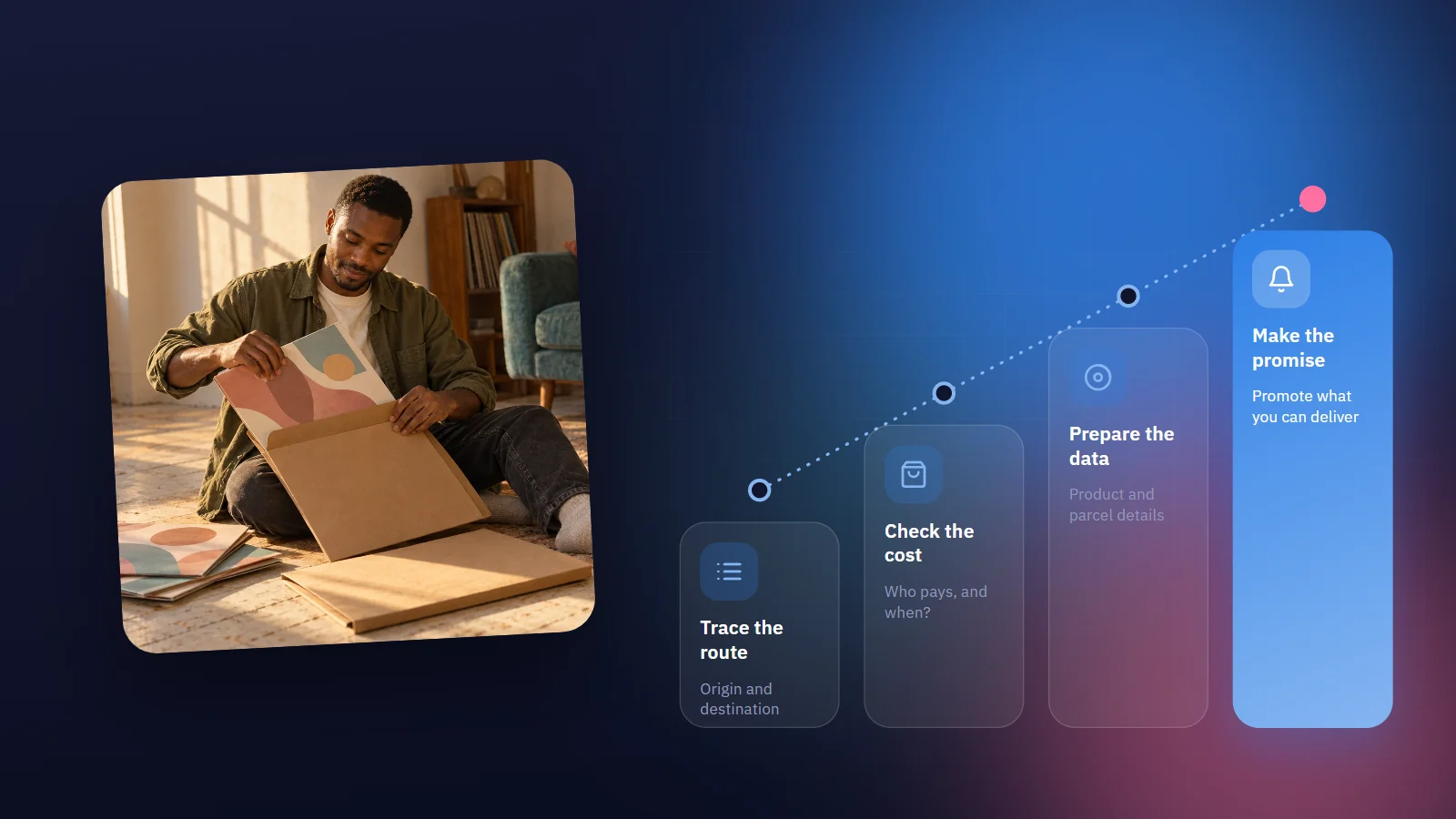
If you sell records or other physical merch to EU fans from outside the EU, check your shipping setup before promoting November orders. Confirm the charges, the product data your carrier needs and what the buyer will be told. A successful checkout does not establish that a parcel can clear customs without another payment.
Bandcamp announced its seller update on 20 October 2026; the changes it describes start on 1 November 2026. The practical job this week is a shipping rehearsal for your real products and destinations, before the next merch push.
What changes on 1 November?
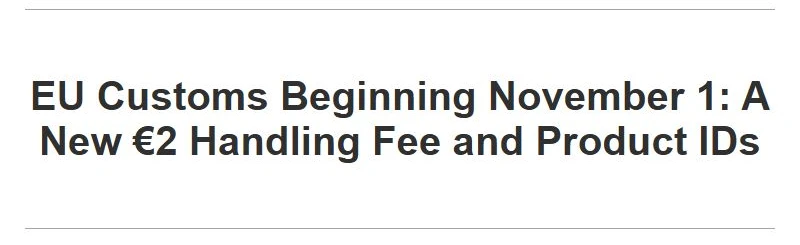
Bandcamp's announcement flags a new handling fee and additional product identifiers for physical orders. Digital purchases are outside this parcel-shipping change.
For the fee's scope, go to the customs authority. Dutch Customs, updated 22 October, says the new charge is €2 per customs declaration line, including e-commerce shipments worth more than €150. VAT is charged on the handling fee. Do not read a low-value-parcel headline as an exemption for a more expensive order.
Irish Revenue's explanation distinguishes that fee from the €3 customs duty introduced on 1 July for low-value goods. Above €150, the applicable goods duty replaces the flat €3 calculation. Neither figure is an all-in postage or import-cost quote.
Start with where the goods actually ship from and where they are going. A musician's nationality, a euro price or an EU-looking shop address does not establish the shipment's customs treatment. Revenue also distinguishes Great Britain-to-Ireland orders from movements between Northern Ireland and Ireland. Give your carrier the actual route and service, rather than applying a blanket rule to every fan.
Rehearse one order before announcing the drop
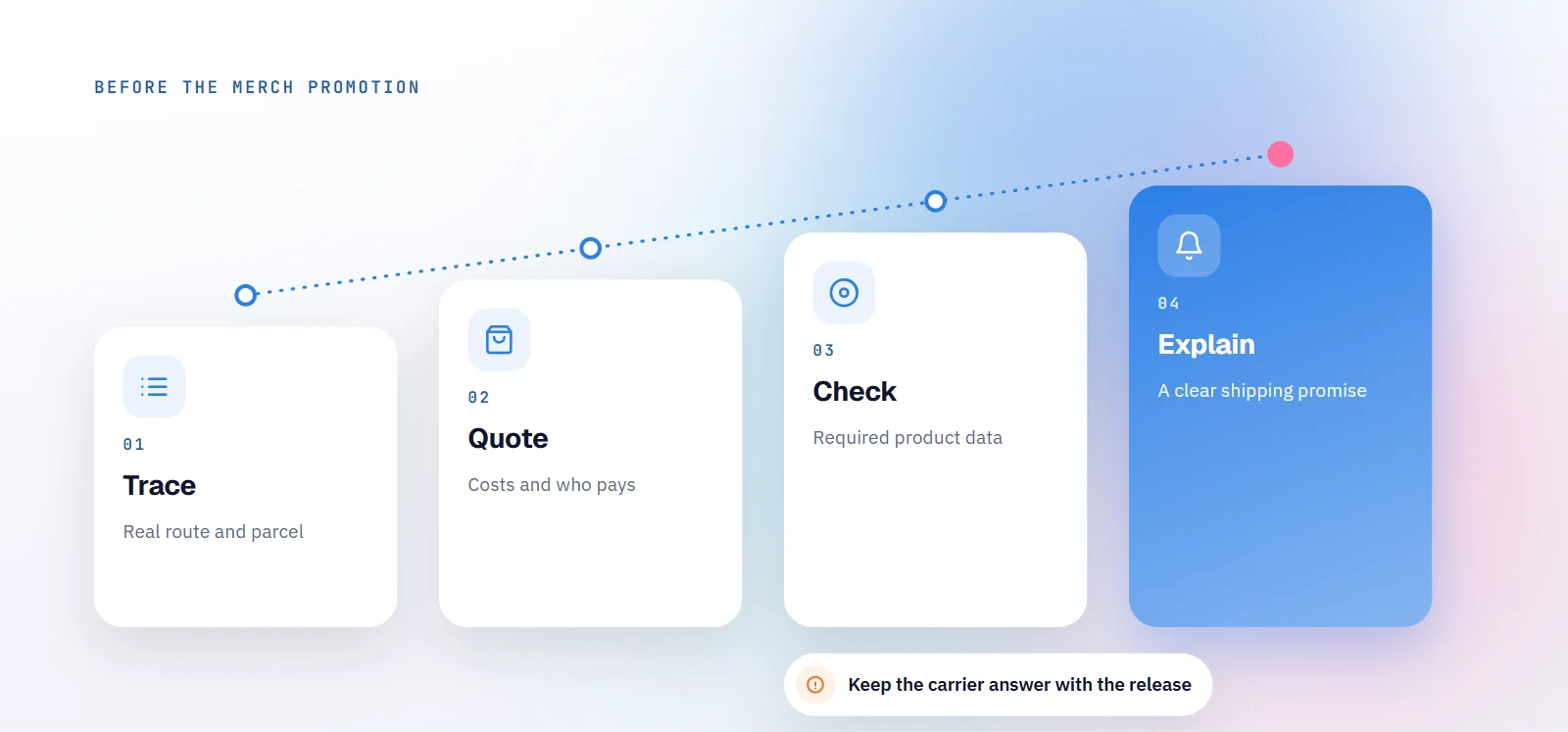
Choose a product you really have in stock and a destination you regularly serve. Pack it as you would for dispatch, then use the measured weight and dimensions in your carrier's quoting tool. Keep this as a draft exercise; there is no reason to buy a label or create a fake customer order just to check the process.
Ask the carrier which charges it collects, when they are collected and who pays them. Save the service name, destination, quote date and answer alongside your shipping notes. If something is unclear, leave the customer-facing claim unresolved until the carrier confirms it. A checkout that collects VAT is not proof that it also collects every duty or handling charge.
Here is a fictional worked example, not a quoted shipment: an artist in Manchester plans to send a vinyl record and a T-shirt to a fan in France. If the declaration has two lines, the new handling-fee component is 2 × €2 = €4. That is only this component. The artist still needs a route-specific quote covering postage, applicable duty, VAT and any carrier charges. A customer promise of “€4 covers EU delivery costs” would be wrong.
Use the example to ask a better question: “What will this exact basket cost, and will the fan receive a separate payment request?” Do not change item descriptions or combine unlike products into one line to obtain a lower figure.
Prepare product data, not just a shipping label
Bandcamp asks sellers to include product references such as a SKU, catalogue number or barcode, alongside descriptions and HS codes. It also says its VAT/IOSS information should be supplied electronically through the shipping process; sellers can find it in their order paperwork and Merch Orders tax-information area. Keep those identifiers in the appropriate seller and carrier systems, not in public product copy. Read Bandcamp's seller instructions.
Check the actual fields your service requires. For example, Swiss Post's carrier guidance distinguishes a merchant product identifier from a manufacturer identifier, with a standardised identifier where available. That is a useful reason to inspect the form; it is not evidence that every carrier uses identical labels or that one SKU satisfies every requirement.
Make a small packing reference for each edition or variant. Keep the description, internal product reference, confirmed classification, packed dimensions and weight together. If a field is unclear, ask the carrier or a customs adviser to resolve it before dispatch. Avoid inventing an identifier merely to get through a form.
Copy this release shipping checklist
| Check | Evidence to keep | Ready when |
|---|---|---|
| Dispatch route | Actual shipping origin, destination and service | The quote matches the route |
| Physical product | Edition, variant and available quantity | The promoted item can be fulfilled |
| Parcel | Measured packed weight and dimensions | The quote uses the real parcel |
| Declaration | Required product references and classification | The carrier accepts the supplied data |
| Charges | Dated breakdown and payment responsibility | You can explain what the fan pays |
| Store wording | Shipping terms beside the offer | Claims match the confirmed arrangement |
| Dispatch promise | A date or window you can meet | Stock and packing capacity support it |
| Final check | Named owner and next review date | Someone will recheck before the promotion |
Keep the completed checklist with your release materials. It is a working record for your team, not a substitute for the carrier's declaration or advice on your particular shipment.
Make the promotion match the shipping promise
Write the offer from the completed checklist. A useful draft is: “Ships from [location]. Dispatch expected [window]. [Confirmed explanation of import charges and who pays]. Shipping details: [link].” Replace every bracket before publishing. Only promise that charges are included when the service and checkout actually support that promise.
Recheck an older scheduled promotion if it sends fans to shipping terms that have changed. Keep the actual product page and its fulfilment explanation close to the purchase decision. The Academy's fanbase guide makes the wider point: a real offer needs a clear price and fulfilment terms, and purchases must be verified in the store.
For a small release, choose a manageable review batch, such as the first ten physical orders after the change. That is an editorial working convention, not a benchmark. Record whether each order dispatched within the promised window and whether the buyer reported an unexpected payment request. Keep unresolved cases separate from confirmed successful deliveries. A shop-link click is not an order, and a dispatch scan is not delivery.
Keep the music rollout aligned
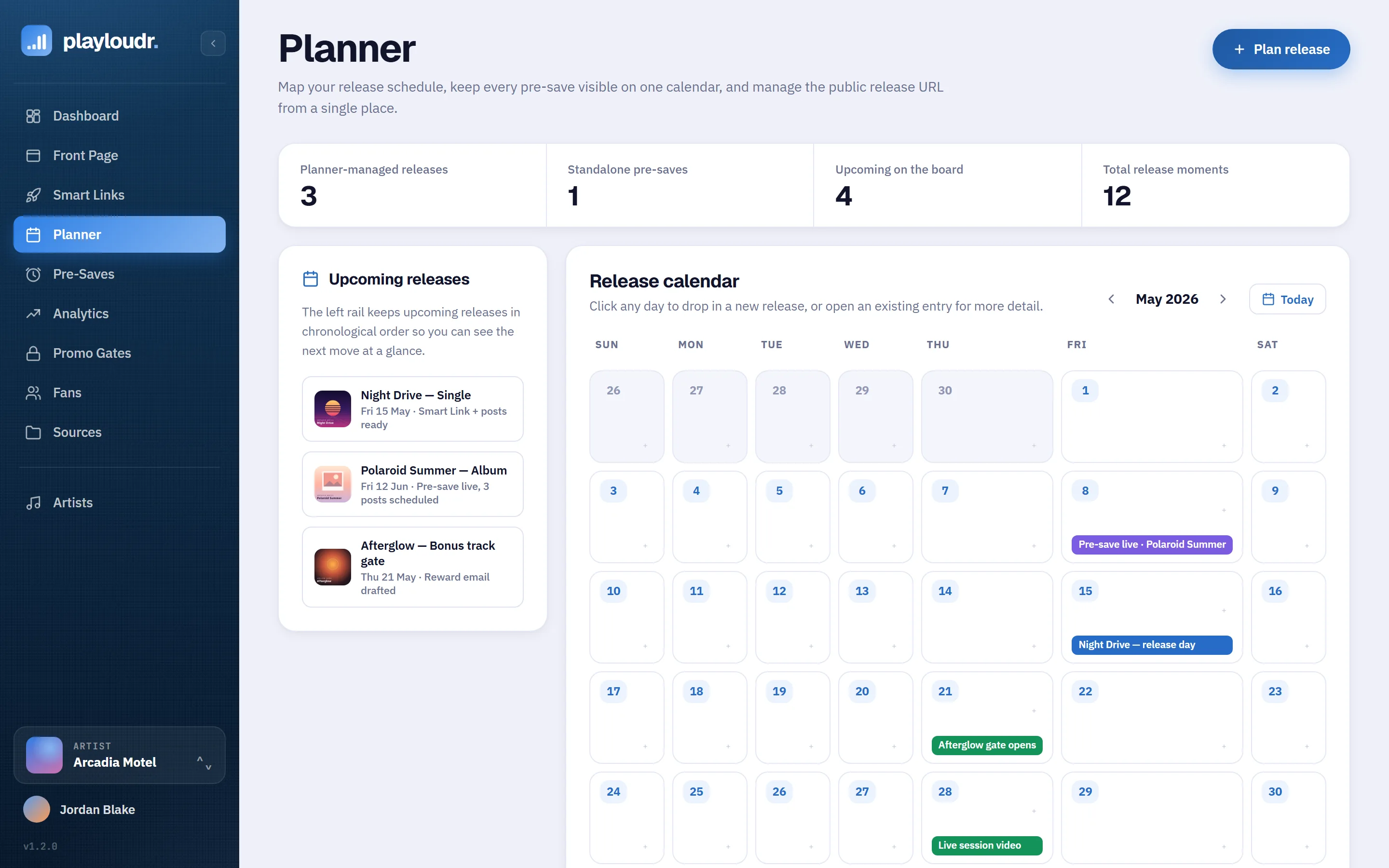
Use the Playloudr release planner to keep release dates and listening pages together while you prepare the physical offer. Keep this shipping checklist with the same release materials, and review the music release checklist before the announcement goes out. Confirm shipping in your store and carrier tools, then make the campaign say what you can deliver.
Sources checked 26 October 2026. The customs change takes effect on 1 November; confirm how your carrier treats parcels around that boundary. The rehearsal, checklist and review batch are editorial suggestions. The fictional example is not a landed-cost quotation.
Sources and further reading
- Bandcamp: EU Customs Beginning November 1 — handling fee and product IDs · checked 26 October 2026
- Dutch Customs: Handling fee for e-commerce · checked 26 October 2026
- Irish Revenue: New Union Handling Fee for goods bought outside the EU · checked 26 October 2026
- Swiss Post: EU Customs Reform 2026 · checked 26 October 2026