
Instagram is testing Features. Check access, separate it from Reels rules and plan one longer music video with a clear payoff and a seven-day review.

Instagram Features is still being tested. For an independent musician, the useful next step is to plan one longer video with a clear reason to watch, a fixed production budget and a review date. Check whether your account can actually publish it before rearranging a release campaign.
A complete performance or a story behind a recording can give interested listeners something an excerpt cannot. The experiment below helps you decide whether that extra production time earns a place in your routine.
What Instagram has confirmed
On 27 October 2026, Instagram head Adam Mosseri said Features was gradually expanding through testing and that the team was exploring ways for creators making longer videos to earn money. His public update did not announce a completed launch or a payment scheme open to every musician.

Check the options and any invitation shown in your own Instagram account. This update does not establish a worldwide eligibility rule, a musician-specific application route or guaranteed earnings. Build a pilot you can afford without an assumed platform payment.
Keep Features and ordinary Reels guidance separate
Instagram’s current Reels recording guidance says you can record and edit Reels up to 20 minutes long. It also says Reels over three minutes will not be recommended to new audiences. The page notes that the feature is not available to everyone.
Those are instructions for ordinary Reels. They do not establish Features’ duration limits, distribution rules or account eligibility. Check the format actually offered in your account rather than applying one product’s rules to another.
For planning, give the complete piece and its short introduction different jobs. The complete video might help an existing listener understand a song; the excerpt might introduce one compelling moment. A short runtime alone does not guarantee discovery.
Choose a reason to watch beyond the excerpt
Start with something specific the longer version makes possible:
- A full performance whose quiet opening matters to the final chorus.
- A demonstration of how two different arrangements change the song.
- A concise account of one production choice, with the before-and-after audio.
- A rehearsal conversation that resolves a real musical question.
Write the viewer’s payoff in one sentence before choosing a runtime. “Hear why we removed the drums from the first chorus” is a workable brief. “Try long videos” leaves the filming and editing decisions unresolved.
Use material you already have where it serves that payoff. Check permission for collaborators, footage and recordings before publishing. Keep a clean master so the same work remains useful if access to a particular format changes. Our six short-video ideas from one song can help you choose a distinct introductory excerpt.
Make a pilot card before filming
The following is a suggested editorial experiment. Its limits are choices you set for your own workload, not Instagram requirements.
| Decision | Write this down |
|---|---|
| Listener | Who already cares about this song, and what would they gain from the full piece? |
| Payoff | One musical question or complete performance the video delivers |
| Production limit | Maximum filming and editing time; who approves the final cut |
| Publishing route | Format actually available, destination URL and a checked route from the introduction |
| Next action | One relevant invitation, such as hearing the released recording or answering a musical question |
| Review | First seven days after publication, with the measures and next decision agreed in advance |
If Features is unavailable, keep the full piece on a video channel you already use and make an Instagram excerpt that points listeners towards it through a working route. Record that as a different format test. There is no need to delay an otherwise ready release while waiting for access.
A fictional rehearsal example
Imagine an independent duo, Paper Harbour, with a filmed rehearsal of a new single. They plan a six-minute edit: a brief explanation of the changed arrangement, an audible comparison, then a complete performance. They cap additional editing at two hours and select one short musical contrast as the introduction.
These names, durations and time limits are fictional planning choices, with no campaign results attached.
Before posting, they watch the export on a phone, check that speech and music are intelligible, and confirm that the promised comparison appears. They test the destination from the actual public profile. If the six-minute version adds little beyond the excerpt, they shorten it before publishing.
Record one seven-day readout
Save the exact publication time, format, video duration and review window. Take the first readout seven days later. This is a consistent observation window, not an algorithm rule. Keep this round focused on one change: giving the musical idea a complete longer treatment. Keep the song and promotional effort comparable where practical.
Record only what the format’s reporting actually provides:
- Reach: unique accounts reached, if that is how the platform labels the measure.
- Views or plays: retain the provider’s name and definition; repeat plays can make these different from people reached.
- Watch time: record total or average time as labelled. Average time divided by video length is not the percentage of viewers who finished.
- Useful responses: count distinct people whose comments address the musical question, using a written rule so the same person is not counted repeatedly.
- Destination activity: record identifiable visits or service-button clicks where available. These do not prove a stream or that every visitor watched the video.
- Production time: include filming, editing and checking, even when you reuse footage.
Unavailable reporting is unknown, not zero. If you compare with an earlier video, choose the closest comparable performance or story and use the same age after publication. If none exists, this pilot establishes your baseline. Note differences in length, format, audience and promotion. If you calculate a response rate, state its denominator: distinct useful responders divided by accounts reached, only when that reach measure is available for the same video and window. One observational pilot cannot prove that the format caused a change.
Repeat when the piece produced useful listener responses or meaningful viewing within your time limit. Change one creative element if viewers’ feedback identifies a specific problem. Pause if the extra work crowds out the release or the longer version has no clear payoff. Keep the actual counts beside that decision.
Put the pilot beside the release
Use the Playloudr music release planner to keep the campaign’s releases, dates and listening pages together. Put the video’s preparation and review dates into your campaign plan, and check that its invitation points to the correct release state.
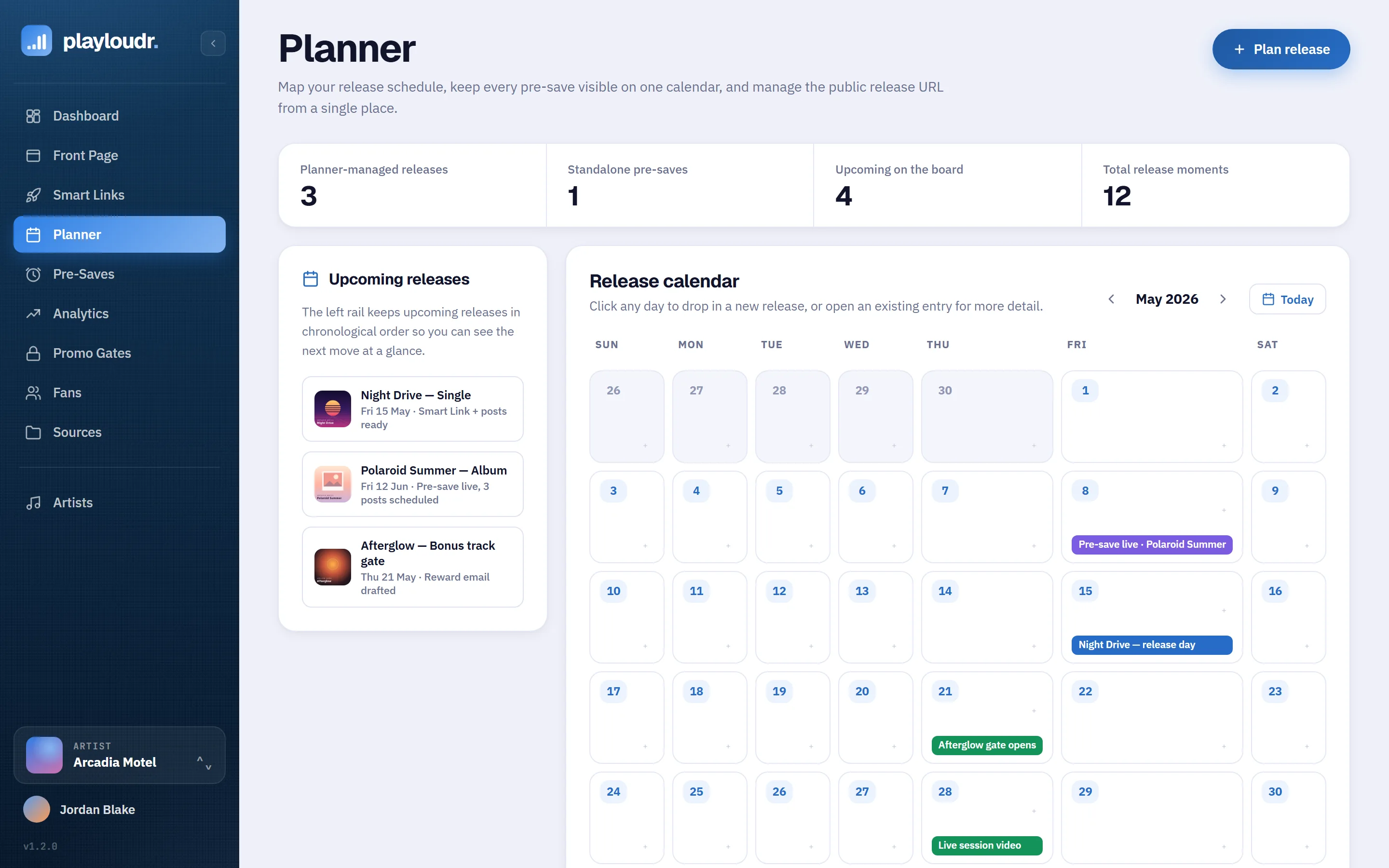
Publishing access for Features must be checked inside Instagram. Planning the work in Playloudr does not establish that Features publishing is supported. A useful outcome from this pilot is a specific decision about the next video, with the time spent and listener response recorded.
Sources checked 2 November 2026. The pilot, fictional duo and seven-day review window are editorial suggestions.
Sources and further reading
- Adam Mosseri: Instagram Features is still being tested, 27 October 2026 · checked 2 November 2026
- Instagram Help: record a Reel, duration and recommendation guidance · checked 2 November 2026
- Playloudr: turn one song into six useful short videos · checked 2 November 2026
- Playloudr music release planner · checked 2 November 2026